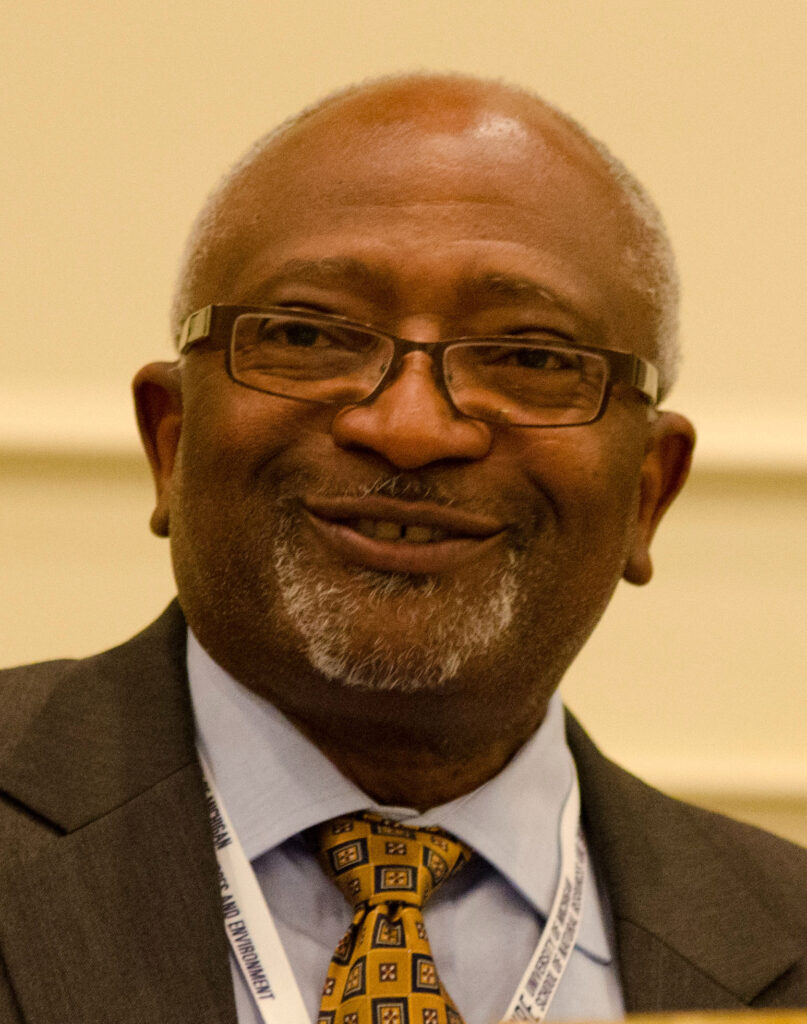
The statement from the United Nations Environment Programme just about says it all. Upon presenting Dr. Robert D. Bullard with the 2020 Champions of the Earth Lifetime Achievement Award, the UNEP noted “Robert Bullard has shown us how one person can mobilize others to build a movement for the planet and for social justice. His commitment to the idea that all people, regardless of background, have a right to clean air and clean water reflects a human-rights based approach to the environment, which is critical for global discourse. UNEP is honoured to recognize this pioneer with our highest possible award.”
Robert Doyle Bullard was born in Elba, Alabama, on December 21, 1946. He was a good student as a child, graduating second in his high school class. He received a Bachelor’s degree from Alabama A&M University in 1968 and then served two years with the US Marine Corps. He then studied sociology at Atlanta University (M.A., 1972) and Iowa State University (Ph.D., 1976).
He took a position as an assistant professor at Texas Southern University, a HBCU in Houston. While there, his wife, attorney Linda McKeever Bullard, asked for his help developing data for a lawsuit challenging the siting of a landfill in an African-American neighborhood. Driving around the city with maps and colored markers, he discovered that the vast majority of landfills in Houston were in African-American communities, although only 25% of the city’s population was Black. “It was an awakening for for me,” he remembered. “I decided I am not going to do dead white men sociology. I am going to do kick-ass sociology.”
And the rest, we might say, is environmental justice history. Bullard expanded his study nationwide, documenting in his first book (Dumping in Dixie: Race, Class and Environmental Quality, 1990) that pollution landed disproportionately on minority communities. That book, and his continuing work, established a new field of research and activism and earned Bullard the rightful title as “father of environmental justice.”
Bullard has labored for a lifetime to help the world understand that environmental degradation and racism are not two problems, but one. “It took us almost 25 years until the two movements merged,” he said, “until folks on both sides woke up to the realization that what we were experiencing in low-income and communities of colour was a form of systemic racism with detrimental health impacts. Not only that, but that these environmental disparities were having detrimental effects on life expectancy, home ownership and transformative wealth creation.”
His work is an inspiration of passion and persistence. He has written or co-written eighteen books that range broadly across environmental justice, encompassing sustainability, land use, housing, transportation, smart growth and many other issues. He has received numerous awards for his work, frequently cited as among the most important African-American environmental voices in the nation. He moved among several universities during his career, but returned to Texas Southern in 2011, where he began. He served as dean of public affairs there until 2016, and is now Distinguished Professor of Urban Planning and Environmental Policy.
After more than forty years in the academic and activism trenches of environmental justice, he remains optimistic. “On our side we have lots of committed troops on the ground and a growing movement of young people,” he said. “Because of the way race operates in this society, there are some people — poor white people, for example — who have been given blinders; they’re blinded by racism and have voted against their own best interests. When we take the blinders off and allow every single American to rise and reach his or her potential without these artificial barriers, then we could really become a great country.”
In accepting the UNEP Champions of the Earth Lifetime Achievement Award, Bullard expressed what I think we all need to realize: “There is a long arc of justice, and we have to understand that this is not instant oatmeal. If we get you all to understand that these struggles are long term, we will reach that North Star: justice, fairness and equity for all.”
References:
Bullard, Robert. Dr. Robert Bullard, Father of Environmental Justice (website). Available at: https://drrobertbullard.com/biography/. Accessed January 28, 2021.
Dicum, Gregory. 2006. Meet Robert Bullard, the father of environmental justice. Grist, Mar 15, 2006. Available at: https://grist.org/article/dicum/. Accessed January 28, 2021.
UN Environmental Programme. 2020. Robert Bullard — Lifetime Achievement Award. Available at: https://www.unenvironment.org/championsofearth/laureates/2020/robert-bullard. Accessed January 28, 2021.