
On the horns of a dilemma, I chose not to decide between horns. Instead, I feature two great ornithologists today, both born on July 5. Not only do they share expertise in ornithology, but they are also linked by their equally important expertise in genetics. Let’s go in chronological order.
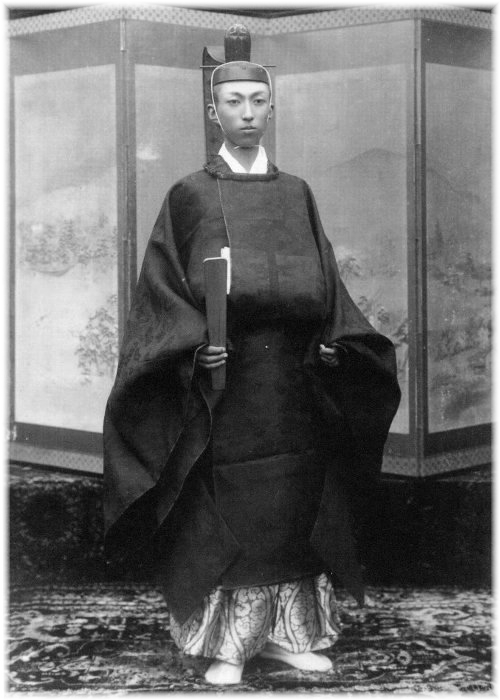
Yoshimaro Yamashina was born in Tokyo on July 5, 1900 (died 1989). He was a member of the royal family of Japan; the family’s wealth and status gave him opportunities to do as he wished. What he wished to do was study birds. After a short military career, he studied ornithology at the University of Tokyo, and, after graduation, founded an ornithological museum and laboratory that is now called the Yamashina Institute of Ornithology.
He collected birds throughout Japan, eastern Asia and the Pacific. He published his first major work, volume one of Japanese Birds and their Ecology, in 1933. Volume 2 followed in 1941. His interests spread to genetics, and he pioneered using chromosomes as the basis for avian taxonomy (his paper “Animal Taxonomy based on Cytology” in 1949 is a classic in the field). He used his knowledge and position to support conservation, leading several organizations for preservation of avian biodiversity and receiving major awards for his science and public service.
Yamashina may not be a commonly known name today, even among ornithologists, but the name of the second of today’s bird scientists is. Ernst Mayr is known worldwide today as one of the 20th Century’s greatest evolutionary scientists, but let’s start with his bird work.
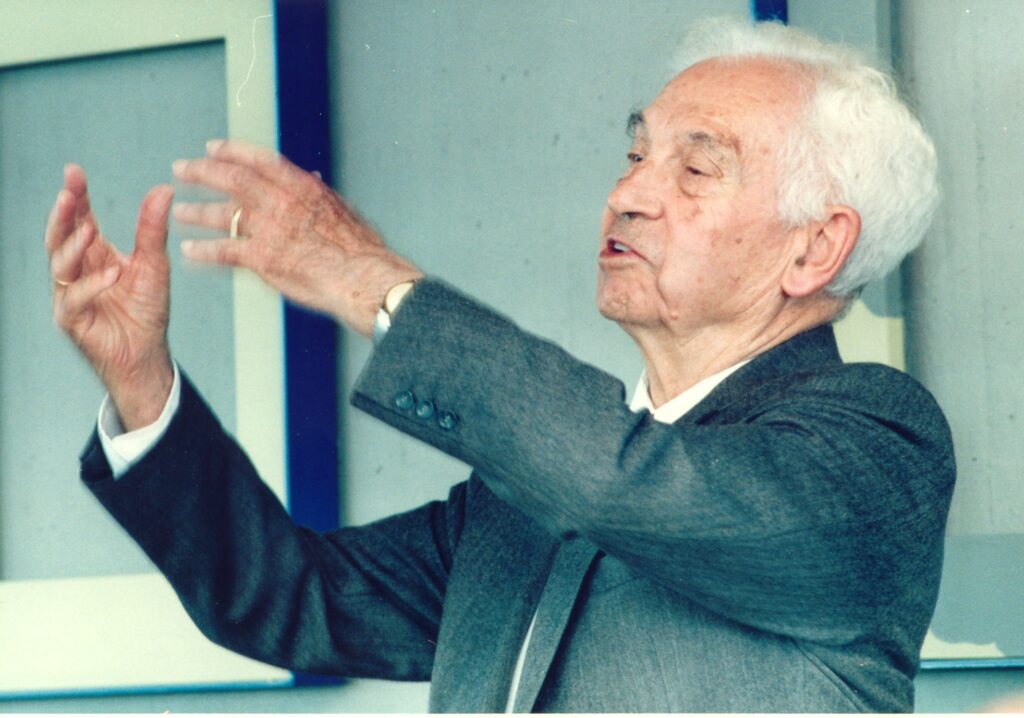
Ernst Walter Mayr was born on July 5, 1904, in the Bavarian region of Germany (died in 2005). Mayr’s father was an amateur naturalist, so Mayr grew to love nature as well. By age 10, he could identify all the birds in his local German ecosystem by sight and sound. He went to the university to study medicine, but ornithology still captured him. He switched from medicine to zoology at the University of Berlin, graduating with a Ph.D. at age 21. He began working in the university’s museum, led a 2.5-year expedition to New Guinea, and then joined another expedition to the Solomon Islands. He collected more than 7,000 bird specimens, noting that the work satisfied “the greatest ambition of [his] youth.”
In 1931, he traveled to New York for a one-year job as an ornithological curator at the American Museum of Natural History (learn more about the museum here). One year stretched to two full decades, as Mayr systematically (excuse the pun) worked through the museum’s bird collections. He described 26 new species and 410 subspecies while at the museum.
But Mayr’s mind couldn’t be caged with just birds. Lake Yamashina, he went deeper, into the link between diversity and genetics. In 1942, he published a book that unified the work of Darwin and Mendel, Systematics and the Origin of Species (learn more about Mendel here). That work addressed the vexing question of exactly how new species formed. He explained that populations of one species that were isolated from each other accumulated changes in their genes, through Mendelian genetics and mutation; natural selection working on those changes eventually separated the groups so much that they became new species. Coming at the material from the viewpoint of a zoologist, and uniting European and American thought, Mayr produced what is sometimes called the “Bible of new systematics.”
Mayr eventually left the museum for a second career as a Harvard professor. The expansive nature of his work has earned Mayr standing as one of the greatest evolutionary scientists of all time. He died at age 100, having published more than 700 scientific papers and 24 books, and received scores of major awards and honorary degrees.
July 5 has to be one of the best “double dates” of all time!
References:
Encyclopedia Britannica. Ernst Mayr. Available at: https://www.britannica.com/biography/Ernst-Mayr. Accessed March 16, 2020.
Harvard University. Ernst Mayr: An Informal Chronology. Available at: https://library.mcz.harvard.edu/chronology. Accessed March 16, 2020.
Public Broadcasting System (PBS). Ernst Mayr and the Evolutionary Synthesis. Available at: https://www.pbs.org/wgbh/evolution/library/06/2/l_062_01.html. Accessed March 16, 2020.
Ripley, S. Dillon. 1989. In Memoriam: Yoshimaro Yamashina, 1900-1989. The Auk 106(4):721. Available at: https://sora.unm.edu/sites/default/files/journals/auk/v106n04/p0721-p0721.pdf. Accessed March 16, 2020.
Yamashina Institute for Ornithology. Founder, Dr. Yamashina Yoshimaro. Available at: http://www.yamashina.or.jp/hp/english/about_us/founder.html. Accessed March 16, 2020.